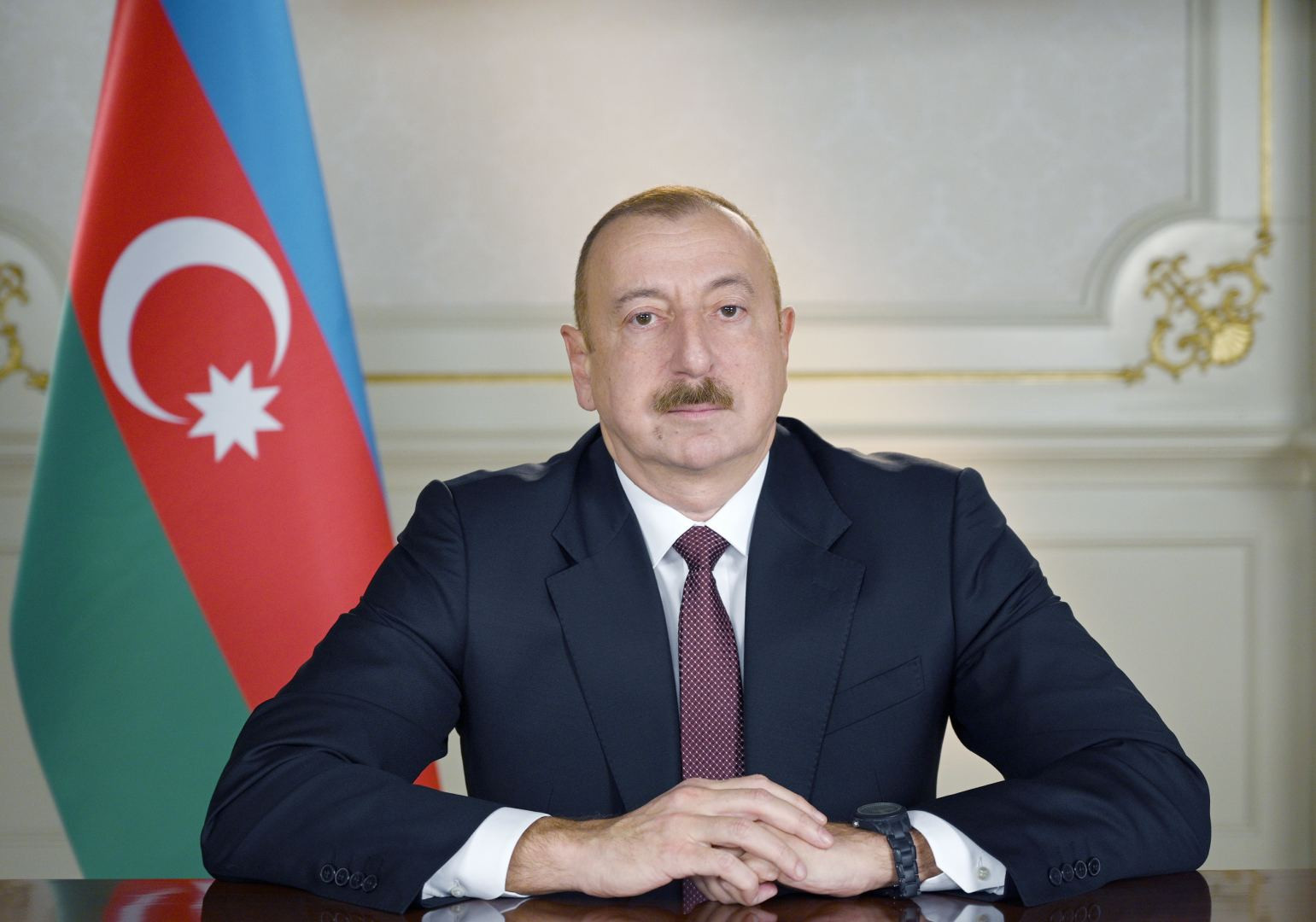
President of the Republic of Azerbaijan Mr. Ilham Aliyev
Address to the Participants of the 6th Azerbaijan International Exhibition “Rebuild Garabagh”
The Restoration, Reconstruction and Development of Garabagh
Dear participants of the event,
I extend my heartfelt greetings to you on the occasion of the opening of the 6th Azerbaijan International Exhibition “Rebuild Garabagh” — “The Restoration, Reconstruction and Development of Garabagh” — and wish all participants every success.
The Victory achieved in the 44-day Patriotic War laid the foundation for a new stage of reconstruction and development in Garabagh and Eastern Zangezur. Under the First State Programme on the Great Return, our cities and villages are being rebuilt, and the safe return of our compatriots to their homelands is being ensured. Azerbaijan is carrying out this work using its own financial resources. To date, 25.5 billion manats have been allocated from the state budget for restoration and reconstruction.
To ensure the safe implementation of the Great Return, more than 300,000 hectares of land have been cleared of mines and explosive ordnance, and more than 40,000 people have returned to 47 settlements. Nearly 100,000 people now live, study and work in the territories liberated from occupation.
The transport infrastructure being developed in Garabagh and Eastern Zangezur connects settlements with one another and with the country’s common economic space. To date, nearly 1,500 kilometres of roads have been built. The 11.7-kilometre Murovdag Tunnel has become an important example of engineering achievement in construction carried out under challenging mountainous conditions. The international airports in Fuzuli, Zangilan and Lachin have been commissioned. Railway construction is ongoing. The Horadiz–Aghband railway line, as an important component of the Zangezur Corridor, is of strategic significance for expanding Azerbaijan’s international transport and logistics links.
Energy and water supplies are also being developed to support new settlements and functioning of production facilities. One new reservoir has been built in the region and five reservoirs have been restored. Thirteen substations and 38 hydropower plants, with a total capacity of 307 megawatts, have been commissioned. Developing Garabagh and Eastern Zangezur as a “green energy zone” is one of the key priorities in building this infrastructure.
The development of infrastructure is accompanied by the provision of modern social services in settlements. Forty educational institutions and 20 healthcare facilities have begun operating in the region, as has Garabagh University in Khankendi. The scope of government, banking, postal and telecommunications services is also expanding. Administrative centres built and commissioned in Lachin, Zangilan, Fuzuli and Aghdam enable social protection, employment and other services to be provided to residents promptly in one location.
Infrastructure development is complemented by the restoration of the historical and cultural portrait of Garabagh and Eastern Zangezur. The restoration of historical, cultural and religious monuments destroyed or damaged during the occupation, together with the creation of modern tourism infrastructure, helps preserve the region’s rich heritage, revive its cultural and spiritual life, and unlock its tourism potential.
The revival of the region also includes addressing the environmental consequences of the occupation. During the occupation, 54,300 hectares of forest were destroyed, and soil and water resources were polluted. To date, 600 hectares of forest land have been restored. The restoration of forests and aquatic ecosystems, as well as the application of construction solutions resilient to the effects of climate change, is of particular importance for the region’s long-term development.
The main objective of the second phase of the State Programme on the Great Return is to further expand private investment, sustainable employment and export-oriented production by building on the opportunities already created, and to strengthen the position of Garabagh and Eastern Zangezur as a new centre of growth in the national economy. The advanced urban-planning and engineering solutions being implemented in the region are generating expertise that can be applied not only in other parts of Azerbaijan, but also internationally.
In this regard, the successful hosting of the 13th session of the World Urban Forum (WUF13) in Baku in 2026, organised by the United Nations Human Settlements Programme, helped present our country’s achievements in urban development to the international community and strengthen Azerbaijan’s position in global dialogue.
The “Rebuild Garabagh” and “BakuBuild” exhibitions, held as part of Caspian Construction Week, provide broad opportunities to share this experience, showcase new technologies and establish business partnerships. I am confident that these partnerships will translate into concrete projects and make an important contribution to the Great Return and the region’s long-term development.
I wish the exhibition every success and each of you further achievements in your work.
Baku, 14 October 2026


 AZ
AZ
 EN
EN
 RU
RU
 ZH
ZH